Ten years is a long time in marketing

In 2016, marketing already moved quickly. Or at least, that was how it felt at the time when Definition was formed.
Social media was firmly established, marketing automation was gathering pace and businesses were beginning to take content more seriously. Even so, much of what we now consider a normal part of B2B marketing may have seemed ambitious, cumbersome or even slightly far-fetched.
Ten years later, expectations have changed considerably.
Everything is measurable, or expected to be
A decade ago, marketing reports often focused on activity: emails sent, events attended, website visits generated and brochures produced.
Today, the first question is more likely to be: what did it achieve?
Businesses increasingly expect marketing to demonstrate its contribution to leads, opportunities, client relationships and revenue. Measuring that contribution is not always simple, particularly when B2B buying decisions involve several people and take place over many months, but the expectation is now firmly established.
Marketing needs to do more, it needs to support a commercial outcome.
Buyers do far more research before speaking to anyone
Prospective clients can now form a detailed impression of a business long before making contact.
They may visit its website, review its people on LinkedIn, read an article, watch a video, listen to a podcast and quietly return several times. By the point they speak to the sales or business development team, they may already have a strong view of the business and whether it belongs on their shortlist.
This means marketing is no longer simply responsible for generating awareness. It must help establish credibility, answer questions and give prospective clients the confidence to take the next step.
The website can no longer be treated as an online brochure that receives some updates every few years.
Content has become everyone’s job
Ten years ago, regularly asking senior people to share their thinking online could still attract a degree of scepticism.
Today, visible expertise is an important part of how businesses build trust. Clients want to understand not only what a company does, but how its people think.
That has created a constant demand for useful ideas, articles, commentary, emails, videos and social posts. The challenge is no longer finding somewhere to publish. It is finding something worthwhile to say and saying it in a way that sounds recognisably human.
Personalisation has moved beyond adding a first name
Most people now expect communications to reflect who they are, what they are interested in and where they are in the buying process.
At the same time, businesses must be more thoughtful about privacy, consent and how they use data. The result is a difficult balance: marketing should feel relevant without giving the impression that somebody has been stalking you online.
Good personalisation depends on understanding the audience, not simply inserting more information into a template.
AI has joined the marketing team
Perhaps the most obvious recent change is the arrival of generative AI.
Tasks that once took hours can now be started in seconds. AI can support research, generate ideas, analyse information and help create content at remarkable speed.
What it cannot do is remove the need for judgement. If anything, the volume of AI-generated material makes clear thinking, originality and a distinct point of view more important. Producing more content has become easier; producing content that matters has not.
The volume of work has grown enormously
This is the change that gets discussed least, and it may be the one marketing teams feel most.
More channels, more content, more platforms, more reporting, more tools that each require setting up and maintaining. Every one of these things is defensible on its own. Together they add up to a workload that did not exist ten years ago.
The risk is a quiet one. It is entirely possible to spend a great deal of time and money refining the minutiae, optimising a subject line, rebuilding a dashboard, adjusting a workflow, and end up with something that performs almost exactly as it did before.
Meanwhile, the things that genuinely make a difference tend to be the ones that get squeezed: having a clear point of view, solving a real problem for a client, doing something noticeably different from your competitors, sounding like yourself, and following up properly.
None of those are new. None of them can be automated. They are simply harder to fit in than they used to be.
Marketing and Business Development are closer than ever
The biggest change may not be a particular platform or piece of technology. It is the growing recognition that marketing cannot operate separately from the people responsible for winning and developing business.
Marketing can create interest, build credibility and open doors. Business Development can turn that interest into conversations, opportunities and relationships. Both are more effective when they are planned around the same commercial objective.
This principle has shaped Definition from the beginning. Over the past ten years, the channels, technology and expectations have continually changed and we have evolved with them. But the need to connect how a business presents itself with how it develops new business remains as important as ever.
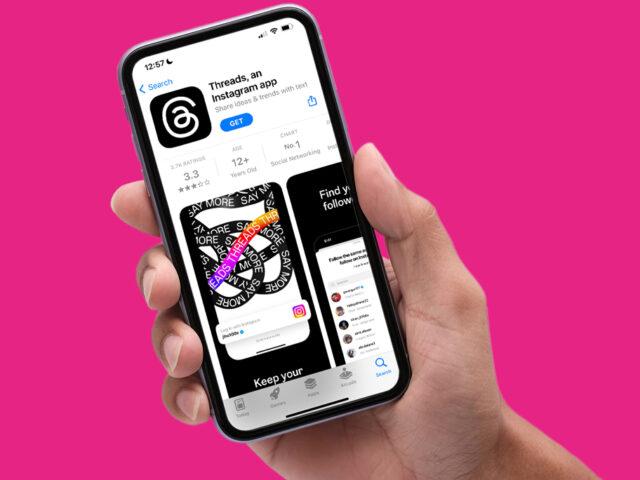
We cannot say exactly what marketing will look like in another ten years. We can be fairly confident that there will be more channels, more data and at least one platform everyone insists we absolutely must join.